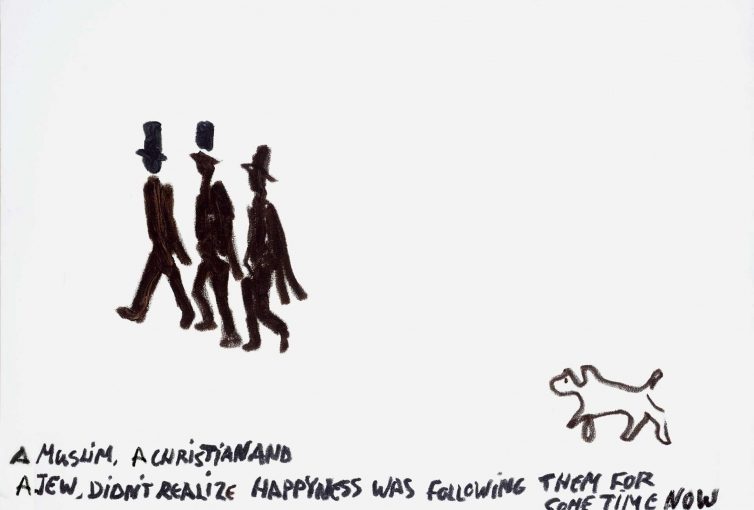
Eran Shakine, A Muslim, a Christian and a Jew didn’t realize that happyness was following them for some time now, oil pastels on canvas, 90 x 120 cm
When we received this card from Eran Shakine’s exhibition at the Jewish Museum Berlin (28 October 2016 – 5 March 2017), we were immediately struck by his deep sense of humour. We even considered renaming our dog “Happyness”. In his large-scale drawings, Eran Shakine considers the similarities and differences between Muslims, Christians, and Jews, and, looking at this drawing, obviously there are none. We all want to be happy but are unable to recognize happyness when it is around.
Eran Shakine paints, draws, and creates sculptures and art in public spaces. He was born in Israel in 1962 to a French father and Hungarian mother, both of whom are Shoah survivors. Now he lives in Tel Aviv, New York, and London.
http://www.eranshakine.com/
Author: Ulrike Wiedensohler
Walls
Posted by Isabelle Franz,
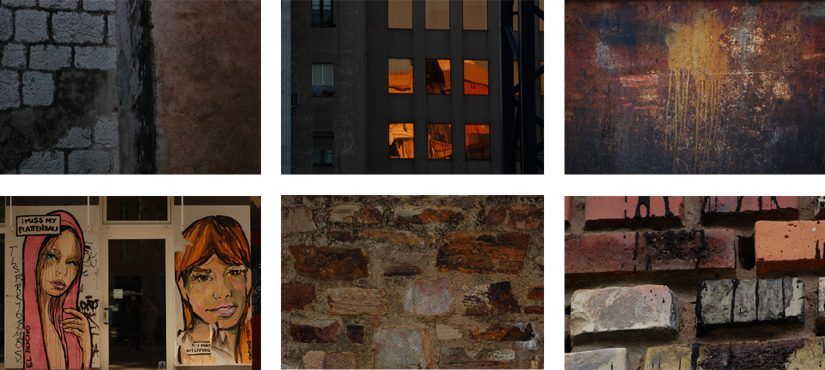
Passing those walls in Barcelone and Berlin, I was wondering about their different purposes. Definitions like „a continuous vertical brick or stone structure that encloses or divides an area of land” or “a thing regarded as a protective or restrictive barrier” are coming up. – A barrier, something dividing one from the other, protecting what’s inside or maybe what’s outside. But what are they reflecting? Do they show me what they protect or what they face? Are they a mirror of what they face right now – or an image of what they had faced over time? Or may be they show me what people behind them want me to think. Sometimes they seem to melt with the outside, with no reference to what they were built for.
Goldseries – „Religionsunterricht“
Posted by Sanni W.,
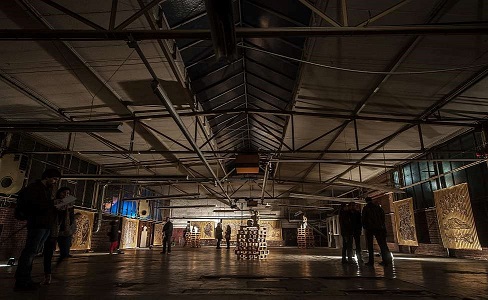
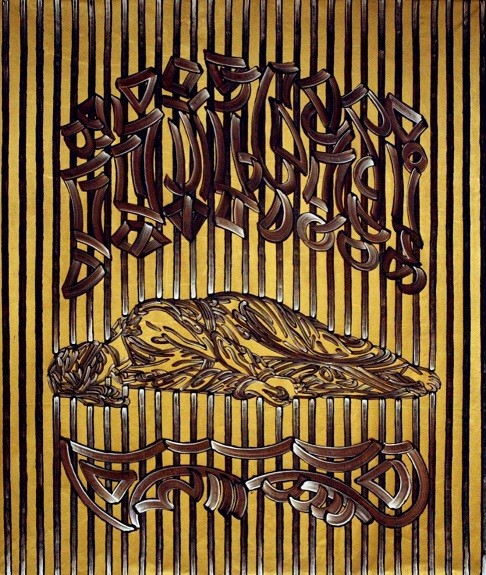
Thomas Richartz‘ exhibition “Religionsunterricht“ immediately caught my attention, not only through the gold coloring and the sheer size of the paintings (1,80 x 2 up to 3m), but also because of the space they were exhibited in, namely a huge industrial warehouse. What I enjoyed immensely was his playful way of using the concept that the meaning of art is constructed by both the artist and the viewer. Visitors could access a list which contained the titels of the nine paintings (all taken from Tucholsky poems), but did not say which title “belonged” to which painting, thus leaving interpretative freedom.
Richartz never uses titles that directly describe his works of art. With this series he returned to a more figurative and thus less abstract and less chaotic style. The inspiration classical art has on him originated in his childhood. It used to be a sort of counterpole to the tristesse that surrounded him.
“Armes Berlin” (“Poor Berlin”): The title of the painting seems to be in contrast to its golden colouring: the stripes in the backgroud for instance could belong to a bourgeoise dining hall.
The figure in the painting at hand seems oppressed, but somehow oblivious to it and also appears strangely supported by the stripes and the other elements. It seems to exist in a sort of virtual world or a dream. Though the figure – probably a woman – seems classical at first glance, it reminds me of poverty, of people in the streets of Berlin who are so much on drugs that they are oblivious of all that is going on around them and who seem to exist in another dimension.
Ort des Geschehens und Zeitpunkt der Vertuschung
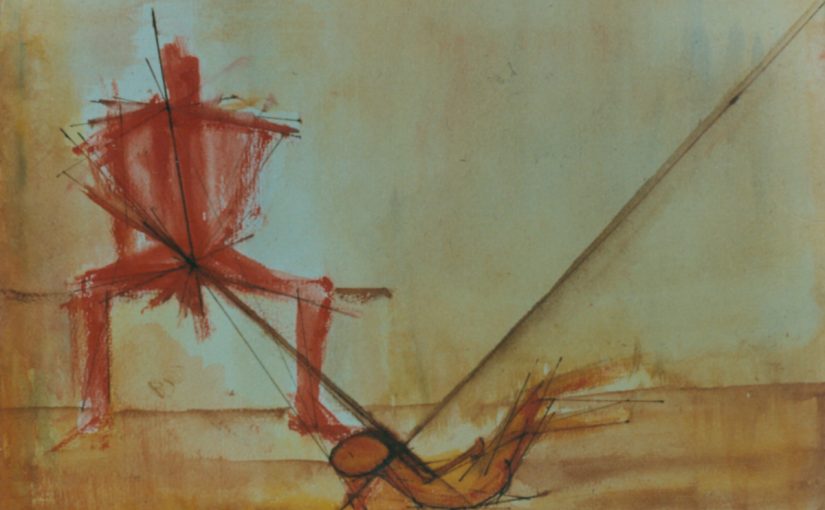
Als Renate Marschner diese Zeichnung 1987 anfertigte, war nicht klar, dass sie einmal den Weg in den YOURARTBEAT Blog finden würde. Klar, YOURARTBEAT ist ja erst 2016 entstanden, also 26 Jahre nach Renates Tod. Und damals gab’s noch keine Blogs. Aber diese Form der Veröffentlichung hätte ihr gefallen. Ich habe diese Zeichnung ausgewählt, weil sie eines der Themen von Renate behandelte: Macht und Ohnmacht. Dabei ist mir aufgefallen, dass der Titel „Ort des Geschehens und Zeitpunkt der Vertuschung I“ (Aquarell / Sepia auf Zeichenpapier) gar nicht so einfach ins Englische zu übersetzen ist. Vertuschung ist auf leo.org mit cover-up angegeben, auf linguee.de auch mit hush-up, während der Wahrig vertuschen als „das Bekanntwerden verhindern“ definiert. Ort des Geschehens ist mit scene of the action gar nicht so schlecht wieder gegeben.