https://www.youtube.com/watch?v=DpgcX03Du4M
On my way to Inselgalerie in Friedrichshain, close to Frankfurter Tor, the area does not seem like a typical place where I would find a gallery. According to gallery director Eva Hübner, galleries must be located in every district of the city. “[…] This part of the Friedrichshain-Kreuzberg district has less cultural and creative offerings than, for example, the area around Warschauer Strasse, and as a result, there are not so many people who often go to galleries without fear of contact“, so Hübner. What does fear of contact mean? There is a certain fear of entering a gallery, but are somehow afraid to enter. I was one of them – but why? Perhaps because a visit to a gallery is not as anonymous as a visit to a museum? “Maybe, but I don’t exactly see it this way”, says Mrs. Hübner. Continue reading “Inselgalerie” – The everyday life of a gallery
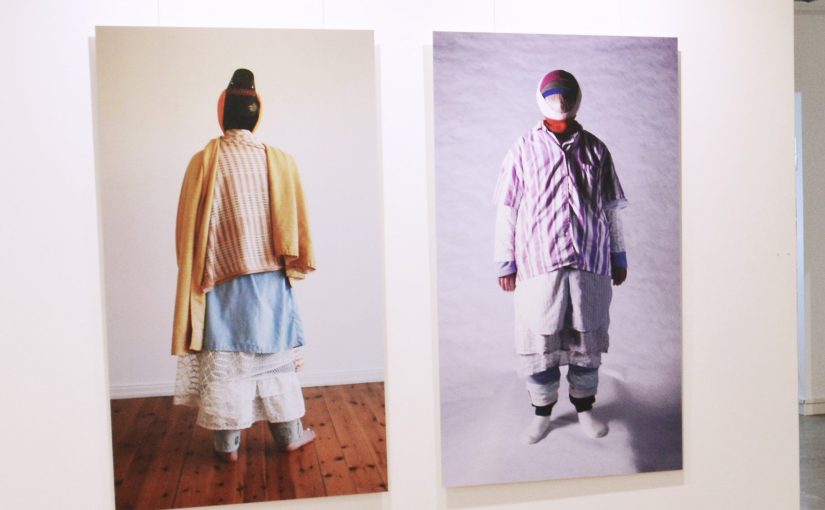
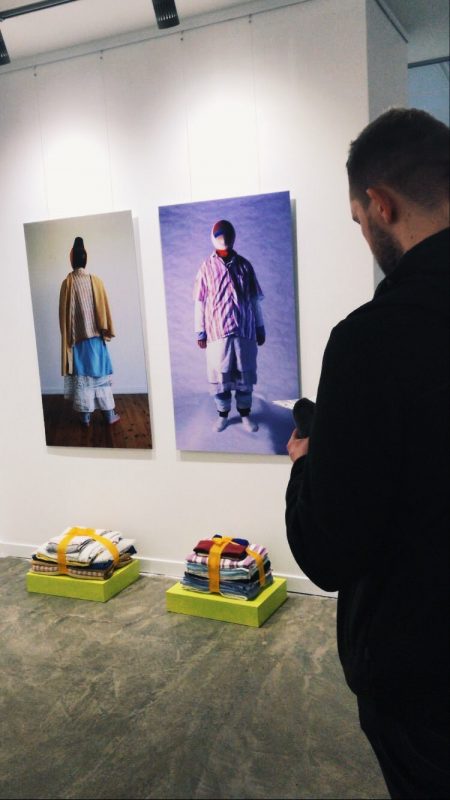 What do I see immediately? Two people wearing different textiles and always several of them. The textiles look like old towels, shirts, tablecloths or window curtains. In both pictures, the faces are covered. In my opinion, this gives the photographs anonymity and something mysterious.
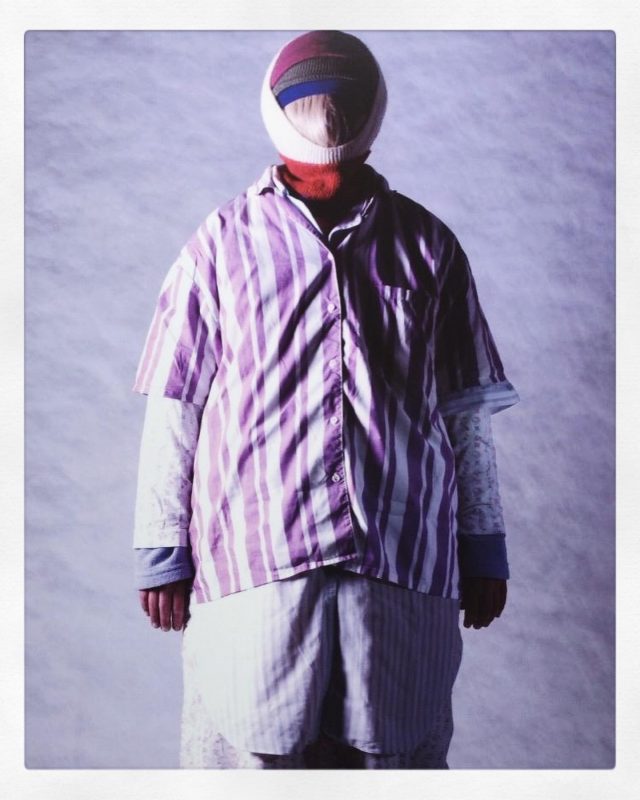 I take a look at the titles of the photographs. They are called “Strangers 1” and “Strangers 2”. The exhibition has the title “transformer” and the gallery manager Eva Hübner tells me that the textiles are garments. Clothes that were once worn by the artist’s mother and grandmother. Several generations are thus connected, quite inconspicuously. Thus the photos express the following for me: Even if some of them are no longer with us, we still carry them with us throughout our lives. They are a part of us.